

Safeguarding Drinking Water Understanding the Unseen Guest—Chlorate—and New Strategies for Comprehensive Control

Safeguarding Drinking Water: Understanding the Unseen Guest—Chlorate—and New Strategies for Comprehensive Control


In the ongoing mission to ensure drinking water safety, we battle not only natural microbial contaminants but also must be vigilant against unintended by-products formed during the disinfection process. Chlorate is one such by-product that has garnered significant attention. This blog will delve into what chlorate is and explore advanced technologies to control it at its source.


Chlorate: Why the Global Concern?

Chlorate is a compound formed when chlorine is in a highly oxidized state. It emerges as a potential disinfection by-product during water treatment and is facing increasingly strict scrutiny from regulators worldwide.


Research indicates that the health risks of chlorate cannot be ignored. It may:


Disrupt Thyroid Function: Inhibit the body's absorption of iodine (particularly in children and infants), affecting the normal synthesis of thyroid hormones.


Impact Blood Health: Potentially adversely affect the production of red blood cells.


Global Standards Vary, But the Consensus is Clear: Strict Control is Necessary

While the regulatory limits for chlorate in drinking water differ across the globe, reflecting local risk assessments and management strategies, the common trend is toward strict control:


World Health Organization (WHO) & China: 700 μg/L


U.S. Environmental Protection Agency (EPA): 210 μg/L (Health Reference Level)


European Commission: 250 μg/L


Canada: 1000 μg/L


Despite the varying standards, the message is unequivocal: the chlorate content in drinking water must be effectively managed.


Tracing the Source: Where Does Chlorate Come From?

While water disinfection is crucial for safety, chlorate is an "accidental byproduct" of this very process. Its primary source is the bulk storage of sodium hypochlorite disinfectant.


During storage, hypochlorite ions spontaneously degrade through the following reaction:

3ClO⁻ → ClO₃⁻ + 2Cl⁻


The rate of this process is heavily influenced by several factors:


Concentration: Higher initial concentrations of sodium hypochlorite lead to faster degradation.


Time: The longer the storage duration, the more chlorate is generated.


Temperature & Light: Elevated ambient temperatures and direct sunlight significantly accelerate the reaction.


pH Value: The acidity or alkalinity of the solution also affects the degradation kinetics.


The Solution: Shifting from Passive Storage to On-Site Generation

The traditional method of relying on purchased and stored sodium hypochlorite inevitably faces the issue of chlorate accumulation. Conventional measures to minimize its formation include reducing inventory turnover, storing at low temperatures in the dark, and procuring lower-concentration products. However, these methods often address the symptoms, not the root cause.


A more fundamental solution is adopting on-site electrolytic sodium hypochlorite generation technology. This method produces a low-concentration sodium hypochlorite solution on demand by electrolyzing salt water and immediately dosing it, thereby drastically reducing the storage  and suppressing chlorate formation at the source.


Comprehensive Advantages of On-Site Sodium Hypochlorite Generator:


Enhanced Safety: The on-site generated sodium hypochlorite is very dilute (approx. 0.8%), classifying it as a non-hazardous chemical, significantly reducing risks associated with transport, storage, and handling.


Significant Economic Benefits: The cost of self-generating sodium hypochlorite is often more advantageous than purchasing commercial bleach and helps avoid market price fluctuations.


Superior By-Product Control: The "generate-and-use-immediately" nature means hypochlorite has little time to degrade, resulting in exceptionally low chlorate levels.


Highly Reliable Supply Chain: The core raw materials are merely salt, water, and electricity, eliminating dependence on complex chemical supply chains and ensuring the autonomy and continuity of the plant's disinfection process.


Environmental Friendliness & Sustainability: Reduces carbon emissions associated with chemical transportation and generates almost no waste, representing a greener water treatment choice.


Technological Breakthrough: How Junchuan's Electrolysis System Achieves "Ultimate" Control?

While the electrolysis process itself can produce trace amounts of chlorate, technological advancements now enable precise control. Junchuan, leveraging its deep technical expertise, has made key breakthroughs in electrode coating and system process design, using a multi-pronged approach to minimize chlorate generation to the extreme:


Core Process Optimization: Increasing brine concentration, enhancing fluid velocity within the electrolyzer, and optimizing operating current to create an electrochemical environment unfavorable for chlorate formation.


Proprietary Electrode Coating: Utilizing a specially formulated electrode coating to suppress side reactions at their electrochemical root.


Intelligent Temperature Control: A unique split-flow cooling technology ensures the solution remains within the optimal temperature range throughout the generation process.


Scientific Concentration Management: Producing a sodium hypochlorite solution at an optimal concentration to ensure maximum stability during its short dosing cycle.


Thanks to these cutting-edge technologies, the Junchuan Electrolytic Chlorine Generation System can stably control chlorate generation to less than 100 micrograms per milligram of available chlorine. This exceptional performance not only easily complies with the world's most stringent current standards but also provides a solid technical reserve for meeting potentially stricter future regulatory requirements, setting a new benchmark for drinking water safety.

Bed Milling Explained Structure, Core Advantages, and Application Guide

In modern manufacturing, precision and efficiency are the keys to competitiveness. Among the various CNC machining methods, bed milling stands out for its outstanding rigidity, heavy-duty cutting performance, and ability to handle large workpieces with high accuracy.
At Keso, an online CNC machining service platform, engineers and manufacturers can easily access professional bed milling and other precision machining solutions — from design to production — starting from delivery as fast as 3 days.

What Is Bed Milling?

Bed milling is a machining process where the worktable remains fixed while the spindle head moves along multiple axes (usually X, Y, and Z). Unlike traditional vertical milling machines, the stationary worktable of a bed mill provides exceptional rigidity and stability, especially when machining heavy components.
Since its introduction in the 20th century, bed milling machines have played a vital role in industries such as mold manufacturing, automotive, aerospace, and heavy equipment — becoming an irreplaceable tool in modern metalworking.


History and Evolution of Bed Milling

Bed milling machines have a long and influential history in the evolution of machining technology.


·Early 20th century: First bed milling machines were introduced to handle large metal components with higher stability than traditional vertical mills.


·Mid 20th century: Widespread adoption in mold making, automotive, and heavy machinery industries due to their rigidity and load capacity.


·Late 20th century to present: Integration with CNC technology enabled automated, precise, and repeatable machining. Modern bed mills now combine traditional structural strength with smart CNC control systems, expanding applications to aerospace, medical, and high-tech industries.


The evolution of bed milling reflects the increasing demand for larger, heavier, and more precise workpieces across industries.


Types of Bed Milling Machines

Bed milling machines can be classified based on automation, size, and functionality:


·  Conventional Bed Milling Machines

Manually operated, primarily used for simple or heavy-duty cutting tasks.

Ideal for workshops with large workpieces but limited automation requirements.

·  CNC Bed Milling Machines

Equipped with computer numerical control, enabling automated movement along X, Y, and Z axes.

Suitable for high-precision and repetitive production, widely used in industrial and aerospace applications.

·  Small/Compact Bed Mills

Designed for medium-sized parts and lighter loads.

Cost-effective for small factories or prototyping.

·  Heavy-Duty Bed Mills

Large, rigid machines designed for heavy or large components like engine blocks, large molds, or industrial equipment.

Can handle high torque and heavy cutting operations without compromising accuracy.


Understanding these types helps manufacturers select the right bed milling machine for their project requirements.


How Does a Bed Milling Machine Work? Understanding the Core Principles

A typical bed milling machine is composed of three key elements: the fixed bed, movable spindle head, and cutting tool system.

·  X-axis movement: achieved by the spindle slide moving along the bed.

·  Y-axis movement: controlled by the spindle head or column, moving horizontally.

·  Z-axis movement: the spindle moves vertically to control cutting depth.

Because the workpiece stays fixed throughout the process, the bed mill provides exceptional stability, allowing precise and vibration-free machining — especially suitable for heavy-duty metal cutting.


The 4 Core Advantages of Bed Milling

1. Exceptional Rigidity and Stability

The fixed worktable design ensures minimal vibration, even during large cutting operations, maintaining tight tolerances and surface accuracy.

2. Powerful Heavy-Cutting Capability

High-torque spindle heads enable efficient machining of thick or tough materials like steel, titanium, and cast iron.

3. Remarkable Load Capacity

The rigid bed structure, often made from high-grade cast iron, can support multi-ton workpieces without compromising accuracy.

4. Outstanding Cost-Effectiveness and Durability

Although the initial investment may be higher, bed milling machines offer long-term reliability, lower maintenance costs, and excellent return on investment.

Suitable Materials and Machining Details

Bed milling machines can handle a wide variety of metals and alloys, each requiring specific considerations:

·Steel: High-strength steels require slower cutting speeds and stronger, wear-resistant tooling. Common for heavy machinery, automotive, and aerospace components.

· Aluminum: Easier to machine at higher speeds, but requires careful chip removal to prevent tool clogging. Often used in automotive parts and lightweight machinery.

·Titanium: Extremely strong and heat-resistant, suitable for aerospace and medical parts. Requires high rigidity and optimized feeds to avoid tool wear.

·Copper & Brass: Soft and conductive metals ideal for electrical components or decorative parts. Requires proper tooling to maintain surface finish.

·Cast Iron: Hard and brittle; bed milling’s rigidity ensures precise cutting without vibration. Common in molds, engine blocks, and industrial machinery.


Machining Tips:

·Use coated carbide tools for high-strength metals.

·Optimize spindle speed and feed rate for material type.

·Ensure coolant/lubrication for heat-sensitive materials like titanium.

·Maintain proper workpiece clamping to minimize vibration and improve surface finish.


Real-World Application Cases

1. Aerospace Components

Large structural parts of aircraft, such as wing brackets or engine mounts, require bed milling’s high rigidity to achieve tight tolerances and excellent surface finish.

2. Automotive Parts

Engine blocks, gearbox housings, and chassis components benefit from bed milling due to their size, weight, and precision requirements.

3. Mold Manufacturing

Injection molds, die-casting molds, and stamping molds often involve deep cavities and heavy cutting. Bed milling ensures stability during the machining process, reducing distortion and improving accuracy.

4. Industrial Equipment

Bed milling is widely used to manufacture machine tool beds, large frames, and heavy-duty energy equipment, ensuring structural integrity and precise dimensions.

These examples demonstrate how bed milling machines enhance productivity and reliability across various industries.


When to Choose Bed Milling

You should consider bed milling when:

·  Processing large molds or equipment components such as injection or die-casting molds.

·  Machining high-strength metals like steel, titanium, or cast iron.

·  High-rigidity and precision are required for your project.

·  Performing deep-cavity or heavy-load cutting tasks where vibration control is critical.


In these scenarios, bed milling ensures superior accuracy and efficiency.


Metal Stamping Offers a Lean Industry Model With Parts of Steel

Metalworking technology is advancing at such a rate that super strong and flexible metals are being introduced to produce parts that are a quantum leap forward from what we are used to. Computer control of processes ensure microscopic accuracy of production, a major key to profitability for metal stamping companies.

Precision sheet metal work is a big part of the science of metalworking; metal stamping is the processes of punching, blanking, piercing, embossing, drawing, bending, forming, flanging, and coining metals into required shapes that will be parts of a larger structure. Metal gets fed and pressed between high tonnage stamping dies. The metal stamping industry has evolved from simple punch presses to ever more efficient presses that use robotics, in-die sensors, and video inspection systems.

Some metal stamping presses can reach gigantic proportions when the need exists. The Savannah Morning News carried a story about a new metal press for Kia Motors that arrived at the Port of Savannah April 12, 2011 that is so massive a major transportation effort was needed to transfer it in pieces after a month-long voyage from Pyeongtaek, Korea across the Pacific and through the Panama Canal. Some of the heavier pieces weighed up to 170 tons and required a special fleet of trucks to transport them 300 miles inland. Once assembled it will be a 5,400-ton transfer press that will stamp sheet metal into 17 different types of vehicle body panels, including hoods, doors and fenders at the Kia plant in West Georgia. Metal stamping machinery in the automotive industry is used for the production of vehicle body parts, metal bumpers, fenders, hubcaps, moldings, and trims.

The technology of shaping metal has also stretched its effectiveness to smaller, more delicate functions. Today's technology can read like science fiction when companies use the process of EDM, sometimes called "spark machining", where an ultra thin brass wire can cut through the hardest metals, as long as they are electrically conductive. Tooling components are cut by wire 'electrical discharge' machines," says Ken Wojcik, Vice President of Operations for Kenmode Tool & Engineering of Crystal Lake Illinois: "Using electricity directed through wire twice the thickness of a human hair, these EDM machines are capable of cutting intricate shapes in steel and carbide in very close tolerance." A series of continuous electrical discharges passing through the wire removes the metal; the wire doesn't contact the steel directly. The EDM process can cut the very hardest metals; for this reason electrical discharge machining us used to make the actual dies and moulds used in stamping. Due to higher expense of operation EDM is preferred to make prototypes and low volumes of production parts.

Related readings:Steel Framing Systems International Door Frame Forming Machine

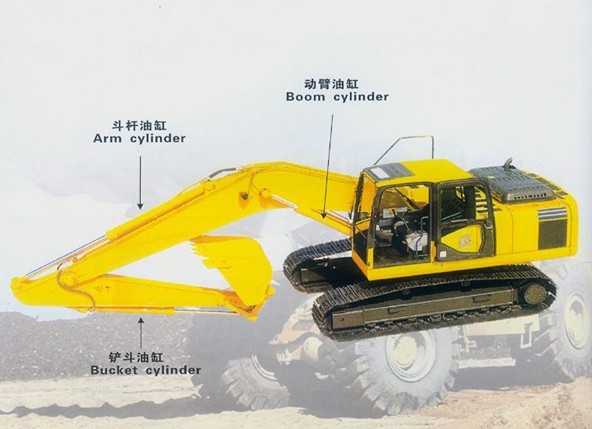
What are different types hydraulic cylinder on an excavator

An excavator typically consists of several hydraulic cylinders that enable the machine to perform various functions. Here are the different types of cylinders commonly found on an excavator:

Boom Cylinder: The boom cylinder is connected to the boom and enables the vertical movement of the boom. It allows the excavator to raise and lower the boom for digging, lifting, and reaching different heights.

Arm Cylinder: The arm cylinder is attached to the arm or stick of the excavator. It controls the extension and retraction of the arm, allowing the excavator to reach forward and pull back during digging operations.

Bucket Cylinder: The bucket cylinder is responsible for operating the excavator's bucket. It controls the opening and closing of the bucket jaws or the tilt movement of the bucket. This cylinder allows the operator to dig, scoop, and release materials.

Swing Cylinder: The swing cylinder enables the rotation of the upper structure of the excavator. It allows the excavator to swing or rotate horizontally, typically up to 360 degrees, allowing the operator to position the machine in different directions without having to move the tracks.

Track or Travel Cylinder: Excavators equipped with crawler tracks have track cylinders that control the movement of the machine. These cylinders extend and retract to move the tracks, enabling the excavator to navigate across different terrains, change direction, and adjust its position.

These cylinders work in conjunction with the excavator's hydraulic system, which uses hydraulic fluid to transmit power and control the movements of the machine. By extending and retracting these cylinders, the excavator can perform a wide range of digging, lifting, swinging, and traveling actions, making it a versatile and powerful piece of equipment for construction and excavation projects.

china excavator hydraulic cylinder